What does it mean?
Food insecurity means a household does not always have enough money or other resources to get the food it needs. It can happen even when there is food at home today. Uncertainty about the next grocery trip is part of the problem.
Being food secure also means being able to get safe, nourishing food that meets a household’s needs regularly. It is about more than having enough calories on a single day.
According to the U.S. Department of Agriculture (USDA), 13.7% of U.S. households experienced food insecurity at some point in 2024. Read the USDA report (opens in a new tab).
What it can look like
Worry about running out
Not knowing whether there will be money for groceries before the next paycheck.
Fewer choices
Buying cheaper or less varied food because the budget does not allow other choices.
Eating less
In more severe situations, cutting portions or skipping meals.
These experiences reflect USDA definitions. See how USDA defines food security (opens in a new tab).
That is why researchers ask people about worrying that food will run out, choosing less varied meals, and eating less. Food insecurity can be recognized before someone has no food at all. See how FAO measures these experiences (opens in a new tab).
Why it happens
Low or unstable pay, job loss, rent, child care, and medical costs can leave less money for food. High prices, limited transportation, and few nearby stores make access harder too. Discrimination and other barriers to opportunity affect some communities more than others. Circumstances differ from household to household. Asking for help says nothing about a person’s worth.
Source: Feeding America: hunger and food insecurity (opens in a new tab).
Some causes reach beyond a household’s budget. Extreme weather and disruptions to growing or moving food can reduce what is available or raise prices. These wider pressures affect communities in different ways.
For the wider picture: Oxfam on food insecurity (opens in a new tab).
Why it can be hard to see
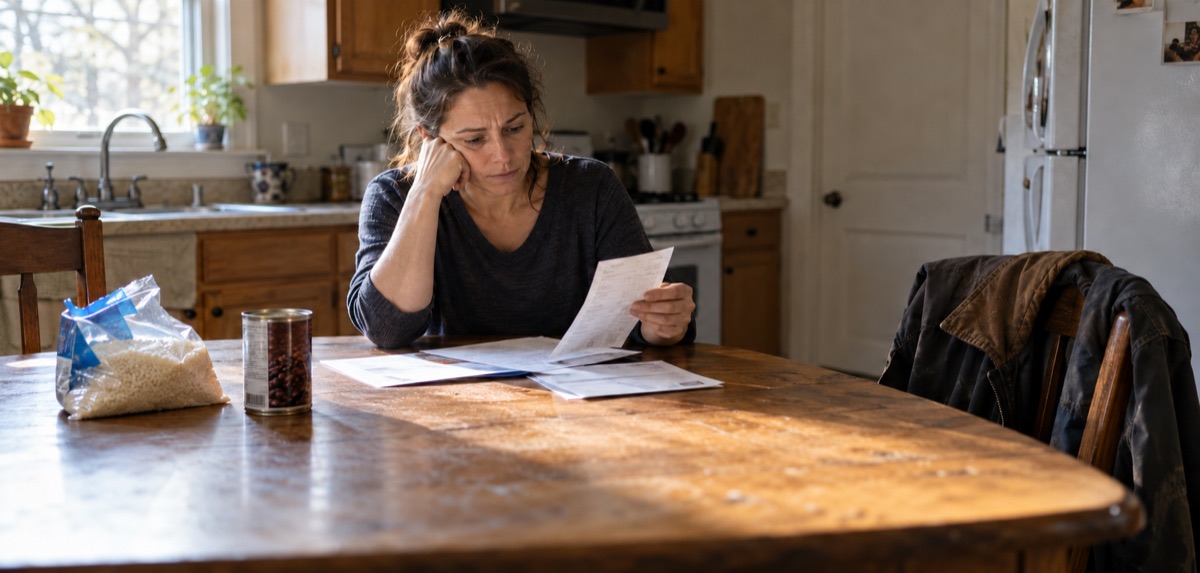
Food insecurity does not have one face. It can be part of a family’s everyday life without being visible to friends, neighbors, or coworkers.
People keep it private
Someone may skip a meal quietly or avoid asking for help because they fear being judged. That does not make the need less real.
Work may not cover the bills
After rent, utilities, and medical bills, a working household can have too little left for groceries.
Appearance tells us little
Less nutritious foods can provide more calories for less money than a varied diet. Fast food can also cost less up front than ingredients for a balanced meal. A person’s body does not reveal whether they can afford healthy food.
Food insecurity is easy to overlook when we expect it to look like an emergency. For many households, it is a steady pressure month after month.
Further reading: USDA on working households (opens in a new tab) and research on the cost of healthier diets (opens in a new tab)
Why it matters
Uncertain access to food can cause stress and make it harder to concentrate at school or work. Over time, it can harm physical and mental health. Food support meets an immediate need; stable income and community resources also matter in addressing the causes.
If we only notice emergencies, we can miss families who struggle for months or years. Food banks help with the immediate need; SNAP and adequate income also matter so households can buy food regularly.
Source: Feeding America: effects of food insecurity (opens in a new tab).
When food goes uneaten
In 2024, about 70 million tons of U.S. food went unsold or uneaten—29% of the food supply. ReFED calls this surplus food. About 60 million tons, or 25% of the supply, went to waste destinations. Surplus also includes food that was donated or put to other uses, so these figures should not be added together.
ReFED valued surplus food at about $380 billion. Just under 13% of food suitable for donation was donated. Recovering more food can help meet immediate needs, but it cannot replace adequate income and reliable access to affordable food.
Source: 2024 data in ReFED’s 2026 report (opens in a new tab) and its surplus and waste definitions (opens in a new tab).
What can help
SNAP helps eligible households buy groceries. Food banks and meal programs can offer more immediate support. You do not have to solve this alone.
Emergency food matters, but it cannot by itself solve a problem that may last for months or years. Families also need enough income and dependable support to buy the food they need.
You can also learn how SNAP works and check the maximum benefit for your household. The maximum is not an estimate of your own payment.